January 11, 2018

Anvar Ali Khan - A Legend in Indian Advertising

Anvar Alikhan. One of the most creative brains of Indian Advertising passed away on December 27, 2017. I have known him since the start of my corporate career at Karvy and have bumped into him many times. What endeared anybody to him is his affectionate persona, almost avuncular, which draws out the best in you. Even with those unconventional grey-purple eyeballs, Anvar was always enthusiastic and curious about everything in life and had engaging skills to get the conversations going on and on. The last time I met him was at a book launch party and I remember how inquisitive he was about the roots of the Global Financial Crisis. Coming from an Advertising Man, I was surprised he had such organic understanding of the issues that engulfed the world economy in those gloomy years of 2009-10. He remembered me from my Karvy days as a banker and picked my brains always but we never got down to serious business, which I regret. "Are you ready?", he used to ask me and then I moved on to a new assignment just as yet but he did tell me he was getting ripped off by his bankers. I wanted to maintain a non-financial, intellectual friendship with him though he asked me to come down to his office several times; I valued that to be the greatest price than a banking relationship. And I followed his body of work remotely as well as through his network of friends in Hyderabad, many of them are too close to me.

As a descendent of Jung family of aristocratic muslims, Anvar Alikhan has been an impeccable Ad professional who has combined the essence of his multi-faceted personality to deliver continuous value in media. He was the pillar of strength for Mindset EY before it got acquired by J Walter Thompson Associates and created some of the most memorable campaigns alongwith Santha John. He truly understood the process of creating a brand that lingers on long after you passed the signal where the bill board ran the campaign. Yashoda Hospitals is just one example of the beauty behind Anvar Alikhan's crusades. It started with a simple slogan: "We hope you never need us." Later, the campaign moved on to interesting and innovative best practices at Yashoda Hospitals but the advertising campaign always relied on delectable visuals with a crisp headline - it could be a robotic surgery, or the first lung transplant or new technology to quell kidney stones. Anvar's campaign built it up with visuals even a child can relate to - so the lungs were visualized as a broccholi and the kidney was an image of a cauliflower - stuff like that made his brand-building campaigns both fun and vivid. So many brands of Hyderabad and other cities from across industries - financial services, healthcare, pharma, utilities, entertainment etc were built by his agency with precision and impact. Many of them also won the plaudits - which is rare for an Ad professional. Like David Ogilvy, he knew the DNA of what makes a good brand ever-lasting.

In many informal meetings with him at media events in Hyderabad, I realized that Anvar's child-like curiosity was always building massive pigeon-holes in his mental library about anything. I remember at one of the book launches, three of us including Anvar were in a conversation about the markets and suddenly, he realized the third person was from the defence industry. For the next forty-five minutes, Anvar was thawing out information about the parts that go into a Bombardier jet with annoying details. He told me later that this is something that he is at the drawing board for a new signup and he needs to soak as much information as possible. Again, conversationalism at work but it shows that a master is always at work because insights can come from innocuous banter. He was also a regular at Derek O'Brien's Brand Equity Quiz and won several prizes almost single-handedly. Derek's quizes were not puritan but it helped Anvar's cause that he could work with both sides of the brain effortlessly to zero in on the Quizmaster's answers pronto. The screening of Cannes Awards was another annual do that brought out the gleeful ad enthusiast like a child to partake in a feast of ice-creams.

But did Anvar have life outside advertising? His close friends vouch that he has a richer life outside the Ad world - which is what makes legends tick. And Anvar’s creative juices never ran out of depth. He was an incurable quiz enthusiast that laid the foundation for all the insights and knowledge he acquired over a lifetime in advertising and travelling across the continents. Anvar used to write for the Outlook magazine, commissioned by Vinod Mehta, usually the travelogue page, the backpage; it was wide-ranging like covering a recent trip to Turkey or Lucknow or giving us trivia about some gastronomical delights. Anvar also edited few anthologies on Indian Advertising and Diaries besides writing many informative and encyclopaedic pieces for The Scroll about trivia – it could be about a lesser-known shareholder in Tata Sons who invested in a single share or about the nuances of India’s Biryani dishes or about Rushdie's anonymous years as an Ad executive. Anvar also covered some of the most famous Indians resident in Hyderabad or visiting the city in Channel 6 magazine as part of “Lunch with Anvar Alikhan”. Some of India’s famous fitness gurus, andrologists, chefs, artists and businessmen were profiled in these pieces which were quite a draw while the magazine played out. His writing style had a unique voice and detail-orientation without sounding laborious or pompous – blended anecdotal reportage with a connoisseur’s touch. Could have been crisper but the final reading left an impact - just as the man always did when you met him. He was gentle, convivial and in blithe spirits and curioser about everything around him. He knew the art of reclaiming conversation from anybody as long as he knew there is gold to be mined from the other side. His humor was also subtle and his manner of speaking was not impresario but persuasive. Friends around him never had a dull moment. He was planning a menagerie of bibliophiles and quizzers shortly but his lung infection took him away sooner. Ironically, one of the posts on his Facebook timeline was about an article written by Serish Nanisetti about why feeding pigeons can harm your lungs. These pigeons cost all of us dear because the infection spread from pigeons in his backyard.

Anvar was also at his best when it comes to curating aspects of Hyderabadi heritage, cuisine, or history. The only person who can beat him to it is the legendary Narendra Luther, IMHO. Anvar, truly, is a gifted personality who has enriched our lives and built a body of work that will endure forever – not only in advertising but in his writings, his anthologies and in the twinkle he kindled in many of his associates, mentees, friends and juniors. Not always an inveterate autograph-hunter, I was always going gaga when I spot Anvar in Hyderabad media events. He never missed an opportunity to catch an interesting event and stayed clear of controversies of whatever variety bred from narrow minds. One of my high points was when I discussed the book of memoirs by the legendary copywriter Neil French “Sorry for the Lobsters”. I could see the disappointment in his face when he admitted he hasn’t read it nor knew about it. That’s what happens when two quiz enthusiasts accost each other. Farewell, dear Anvar Alikhan. You will be missed but your legacy of work will inspire many others to lead a life full of multi-disciplinary approach that created value in every sphere you touch.

#AnvarAliKhan

"Agnyaathavaasi" (Telugu Film Review)

There is one inviolable rule in making milestone films. Either beef up the content to match the momentum of the milestone or reduce the hype. In case of "Agnyaathavaasi" starring Pawan Kalyan, Keerthy Suresh, Anu Emmanuel and Khusboo, the director Trivikram failed to give us content that is usually multi-layered and consistent quality. Result: the film is the biggest disappointment in the career of a director who is usually respected for blending meaningful stories with plausible entertainment. In this film, it appears that Trivikram lost his marbles and missed many vital aspects which otherwise make his films very tight and well-knit. At some point when the director introspects where he had gone wrong he will know the answers why the film is a farce wrapped in an absurdity wrapped inside an epic disaster written without much care.

The story may be inspired and masterfully copied from a French film but any flaws evident in "Agnyaathavaasi" (Agn) are dumber and uniquely attributable to Trivikram and his gang of half a dozen Assistant Directors (whose credits roll a the end of the 158 minute ordeal). At every stage of the story development, there are serious gaps and errors. For example, the main plot is about Abhishikt Bhargava (Pawan Kalyan) who is living incognito as a heir apparent to a Billionaire father Govind Bhargava (Bomman Irani) who along with his other son gets killed by the villains. Under the subtle guidance of the surviving mother (or step-mother) Indrani Bhargava, Abhishikt enters the corporate citadel of his family business empire as a personal assistant to find the real killers of his father and sort out issues of CEO succession. Just when you thought the plot is promising, the treatment will be the most bizarre and incomparably illogical.

Trivikram and his think-tank add layers of artificial romance between Abhi and two girls Anu Emmanuel and Keerthy Suresh and build out some of the silliest gaffes and cheap comedy ever attempted by a Superstar which only dilutes the intensity of the original plot. Besides the original plot which could have been a good excursion in corporate espionage thriller like a "Naanna Ku Prematho" or a "Premaku Velaaya Raa" (Remember SV Krishna Reddy's film starring Soundarya, Chakri and Prakash Raj). Instead, we get Pawan Kalyan do all kinds of gymnastics and acrobatics with cheap, inimitable but mostly effeminate mannerisms which make his role itself unjustified. This makes the film a theatre of the absurd where the audience feels they are being taken for a ride by the director with liberty after liberty.

For example, just for the sake of showing variety and spicing the narrative, the opening shot of the hero is in Assam. That's okay. But later, in a crucial flashback we see the billionaire and his associates flee from Africa with the patented vaccine under threat of an MLA. An MLA in Africa instigating people against the company founder? Then comes another plot point which was never justified - why did the billionaire flee in a plane with all associates but abandon Ajay - which lapse leads to serious casualties on the other side? Because of lack of cohesiveness in the basic plot like these instances, the emotional connect between the hero and his mission in life - to nab the killers and ensure CEO succession - goes largely missing. Neither the scenes between Khusboo and Pawan Kalyan nor the fleeting moments that Pawan Kalyan spends with his father, none of these brings out even a tear drop in you or make you pine for justice. While the romance itself appears half-baked, there was never any valid justification for the hero using such violent means for ascending to the top of the company. For the first time, you get a feeling of watching a routine factionist film with urban setting because of the unique ways in which the hero attacks his attackers.

At the outset of the film itself, the hero uses the analogy of a wooden armchair. He says behind the design and creation of even a simple chair so much of destruction of trees and violent carpentry is at work. This is utter nonsense. This so called "Mini-Yuddham" (Mini-war) is applicable to inanimate things or objects, not fellow human beings. If that were so, like ivory, even wood and other materials would have been banned by now. How Trivikram messed up logic here is ridiculous. Not just that, in a crucial scene in flashback, a particular associate Ajay is abandoned by Gautam Bhargava in his flight from Africa when his factory is under siege. There was never a valid reason for abandoning one of the three friends and invite wrath of his kin. Or, you have to infer this is because Gautam may have seen a brotherhood between the MLA and Ajay. Even then, why did the mob sent by MLA lynch Ajay? No idea. Even to that the hero says some sacrifice is inevitable to lay path of employment for several others. It is this ludicrous rationalization of mindless violence that further welds a strong disconnect in the hero's character. Result: nowhere do you feel either exulted or anxious about all the stunts in the film just like there was no emotional quotient in rest of the interplay sequences between the characters.

A few lines here and there by the characters of Rao Ramesh, Murli Sharma and Vennela Kishore give some comic relief though they remind you of the 80s where Rao Gopal Rao and Allu Ramalingaiah played many comic roles in tandem.While the first half passes a shade better than second half, the content and the treatment is highly flippant and unbecoming of the caliber of Trivikram. Instead of building an elaborate drama of wits and scheming of how the hero tames the villains and overcomes attempts to eliminate him, Trivikram's concentration has only been on using the bells and whistles of a corporate drama without doing proper homework. This reminds us of his ignorance in an earlier movie "Jalsa" where in a dialogue he says,"You guys are auctioning everything from water to oxygen to sand." Of course, these are national and economic resources but it is because of them that government is raising resources and building employment. Nothing comes free. Similarly, someone should have told Trivikram that in "Agnyaathavaasi", in all the elaborate machinery built around a listed company and the quest to establish legitimacy of a successor who is in "exile", he forgets that a billion dollar empire listed on the Wall Street has no succession planning via formation of a Trust or a digital will or the works. It is surprising the founder has a plan B of storing in unsafe banks in Eastern Block countries like Bulgaria instead of safe havens like Switzerland and that too in non-digital format. If a will is written and registered, why does it take so much irrational drama to anoint a legal successor - because it is not getting contested? Even the company's headquarters doesn't show one visual which gives an impression that this is a vaccine making company (and whoever told that TB or BCG vaccine makers are billion dollar companies!). No testing equipment, no animal husbandry visuals, no lab chemists. Instead, the campus in which our Prince AB rolls down his sleeves making fun of people and torturing villain suspects with leather belts looks like a cross between Google campus and Mindspace interior - it is funky and too flaky for a vaccine company. I guess the team of Asst Directors advising the director don't know the difference between a Biotech company and a tech company!

Besides the theatre of the absurd that goes on in the name of entertainment, there are gaping holes in every reel as it progresses. For example, a fellow called Koteswar Rao (Raghubabu) keeps harassing lady co-workers for ten years and nothing happens to him. The security muster is so weak that you can use your ID card for two people at a time. The litany of loopholes in the film can actually trigger a Public Interest litigation and it is so depressing that Trivikram has taken so much of crowd-IQ for granted. In addition to these errors of omission and commission, he has given a narrative which confuses the audience as to the location and time while giving a good audio-visual overlay thanks to excellent cinematography by Manikandan and some exceptional BGM by Anirudh. Music by Anirudh is way more re-imagined than the pace of Trivikram's scene interpretation but atleast that made the movie half-watchable - some of the best stringed instrumentation can be experienced in the Re-recording attempted by Anirudh. But do the audience know he is the music director (because as the lackluster titles roll on, instead of naming the music director, it says "An Anirudh musical" - again proof of consistency check missing in the titles). The songs are good on the audio but poor on visual, another reason crowds are walking out as they unfold on screen.

One of the problems the director had is over-complicating the plot by adding so many characters and accommodating so many villains. In the process, the screenplay went berserk without any character getting registered. One of the main villains Aadi is also wasted with just a few dialogues and swashbuckling characterization. That our Telugu heroes are insecure is proved once again whenever such talents are trivialized. Another problem is the verismilitudes - you feel you are watching a condensed filmography of all of Trivikram's past glories - Sampath's investigation as a SIT officer reminds you of "Athadu" but his character disappears after an intense scene that dumbs down the plot for the audience, a number of scenes right from the way the hero manouevres into the company to the climax just sound like a leaf out of "Atharintiki Daaredi", the whole plot seems a modern fable that is a mixture of "Lion King" and "Baahubali" (as far as the preference of step-mother to the step-son goes). Because Trivikram hasn't stuck to the basic knitting as a writer-director and attempted a silly, complicated plot with high-falatin connotations to urban drama, the film has to be the low point in his career. Perhaps his adulation and veneration for the hero has got the better of his directorial capabilities and sensibilities. This is also the most unsuitable film to be released for Sankranti - there is visual grandeur but hardly anything to do with agricultural splendor - intact far removed from it.
For Pawan Kalyan, this is a forgettable silver jubilee film which didn't click. His histrionics and body-language in the film may appeal to the fan who demands more of him but it will not appeal to the viewer - there is too much "I, me and myself" to it in ways similar to what "Mahesh Khaleja" did to Mahesh. His dressing looks monotonous in the film though elegant and his dancing seems better in Koteswar Rao song but his timing looks still way below what we saw of him in "Jalsa" or "AD". Both the heroines look pretty but their scope is not fully explored by the director - and the final message in the film pointing towards bigamy is in bad taste, not expected from a superstar waiting to take another leap of faith in public life. On the whole, "Agnyaathavaasi" is gross and grating - it is as if a lazy but talented writer has attempted a Seenu Vaitla film by re-mixing his own old versions.

Rating: 2.25/5

#Agnyaathavaasi #Agnyathavasi #Agnyathavaasi #PawanKalyan #Trivikram #Tollywood #AnirudhMusical #Anirudh #TeluguFilmIndustry

November 7, 2017

Sri R P Trivedi - The Man Whose Balance Sheet was Squeaky Clean

Sri RP Trivedi  (1939-2017)

RP Trivedi. The name that became synonymous with Accounting textbooks for a whole generation of career-seekers in the 80s and 90s is no more. After a brief illness, Mr Trivedi passed away at his home in Barkatpura on November 3, 2017. He was 78 1/2 and survived by his wife and two sons, Pankaj and Manoj. Except as an obit in Hindi Milap, most of the newspapers missed covering one of the most popular Accounting gurus in the undivided state of Andhra Pradesh and easily one of the best-known teachers in the faculty of Commerce. Having known Trivedi uncle and his illustrious family for over three decades, I wanted to illuminate aspects of his exemplary life and contribution to Accountancy subjects for the benefit and nostalgic value of folks who breezed through their degree and professional exams in those times. Though the family believes in keeping low profile, the world must know and acknowledge the scale of a subject legend who devoted all nerve and sinew to furthering the subjects of Accounting.

Mr RP Trivedi's father was a fourth-generation scholar settled in Hyderabad and expert having been enlisted in the Nizam government for looking after the Treasury, so numeracy and bean-counting was always in the genes. Born in 1939, and married to a Hindi Lecturer - Gulab Devi Chand, Mr Trivedi was academically bright - Gold Medallist in M.Com and Gold Medallist in LL.B, so doing CA would have been a walk in the clouds for his academic rigor but the family financial pressures got the better of him. Between the choice of CA and higher academics, he chose teaching and joined Vivek Vardhani College of Commerce where he rose to become the Head of Department, Commerce. Yet, he continued working tirelessly to supplement incomes to support a large family, wife and kids. At one time, he was working in four different teaching assignments, at VV College (Day) and (Eve) and two other colleges. Even the Principalship of the college beckoned him several times but Mr Trivedi politely stayed away from temptations and pressures of an Administrator job. He used to say,"I want to be a teacher and not an Administrator." But touching more lives through teaching was not so easy and that is when he got the idea of starting publications. Pankaj Publications, named after the first-born, was born thus circa 70s.

The idea of low-priced and affordable Accounting text books was a revolution those days for the baccalaureate programs of B.Com course. Students were in duress due to lack of simple textbooks in Accountancy and Cost Accounting that came at high prices then. To navigate the world of accounting, one had to either go to elephant-sized tomes like Shukla and Grewal or try to decode India-relevant theory and problems from the ever-complicated but seminal book - Accountancy by Pickles or that monster of the book called Accountancy by Chakraborty - all of them priced at princely rates. The B.Com syllabus was comprehensive but for students just starting off in Accountancy, there has to be gradation in problem-solving. Mr RP Trivedi sensed that the market was ripe for his style of teaching and easy-to-follow instruction manuals n the form of a book that was simple, handy and yet measured and graded for acing up the tricky subject of accounting. In bringing out a book that meets with all these expectations, it also has to be affordable to a student who is living on pocket money from parents - a situation that Mr RP Trivedi is well familiar with as a student. The first book of Financial Accounting brought out by Pankaj Publications was priced at Rs.1.25. Today, after completing 44 years in existence, the range of publications has expanded and won universal acclaim and adulation of both students and teachers of Accountancy alike. Fundamentals of Accounting, Business Organization, Cost Accounting, Management Accounting, Business Organization, Advanced Corporate Accounting, Business Statistics, Financial Accounting, Advanced Accounting - today, students have now Trivedi-style textbooks covering the entire gamut of core Commerce subjects that still come in editions priced below one hundred rupees.

What started off as a way of imparting easy format accounting textbooks has become a fledgling publications business capturing the top slice of the academic market, sweeping the entire commerce market in the two states of Telangana and Andhra Pradesh and even some states beyond. The other thing that helped airlift teaching of accountancy subjects thanks to Mr RP Trivedi's books was the efficiency factor. The theory part and the problems part were well-graded and sometimes made the textbooks bifurcated or combined as it suited the students, but always strictly as per syllabus, both in English and Telugu. Before his books came, the subject of Accountancy as it was taught in those days was twice longer - because the lecturer had to carry bulky books to the class, first dictate the whole accounting problem in the class which itself took forty-five minutes and solve the problem in the next class! That changed fortunately once the portable books of Mr Trivedi hit the bookshelves making graduates shine brighter and even take to higher pursuits in CA/CMA/CS courses. Ever since, both lecturers and students of Accountancy were literally, on the same page! Pankaj Publications, it is no exaggeration, would be single-handedly responsible for a surge in craze for BCom graduates in the 80s and 90s and must have helped many cross the mental blocks or phobia in accounting. Of course, many who have settled in India and abroad would vouch for the contribution his books played in mastering the subject of Accountancy.

Mr Trivedi's teaching was not didactic. He gave illustrations that stuck on, had concept clarity and yet was highly entertaining. He had a self-deprecating sense of humor and remained humble throughout his life, always respectful of what the other person can teach that he can seek despite his being a nonpareil teacher. He believed in the virtues of integrity, hardwork and bloody hardwork for every course be it B.Com or CA. His methods of study, methodical approach to tackling examination anxiety and diligent note-taking and skillful revision -all these set his teaching apart. Some of the most iconic teachers of professional courses who sprung up in the 80s - Mr Buchi Reddy, Mr Mani, among several others openly acknowledge even today that Mr RP Trivedi was the original guru who inspired them. Several qualified Accountants from the professional courses and even MBAs occupying corner offices today attribute their success to the influences of having worked out the crisp problems in Trivedi textbooks at some point before plunging deep into the subject. As long as you lay your hands upon a Trivedi textbook, Accountancy was accessible and appeared less intimidating than those Sultan Chand and S Chand tomes looking down at you from the higher shelves.

For a person who gave lifelong service to commerce, Mr Trivedi kept the candle of learning burning throughout. Never lost touch with the bulging legislations in Companies Act or shifts from the horizontal format of Financial Statements to the Vertical formats. His legacy of textbooks was equalled by his real legacy, his offspring. Eldest son, Pankaj Trivedi is a qualified CA and a prominent office-bearer in the Hyderabad chapter besides a flourishing practice. His wife, Mrs Mamta Trivedi, a fashion designer and a beautician recently just won the first Mrs India beauty pageant and is well-poised to represent India at the world stage (coming up next). Their children, Preksha and Pravekh are equally luminous in their pursuits. Preksha is pursuing her passions in scriptwriting and has published her first book already. Pravekh, a Maths Olympiad champion all through his teens is preparing for a third-generation career in Accountancy courses like father and uncle.

Of all, the one who is poised to carry on the legacy of Mr RP Trivedi is my good friend and younger brother of Pankaj, Manoj Trivedi. After bagging State 4th in Intermediate, and completing his CA and ICWA courses in merit rankers list, Manoj went on to finish PGDM in IIM Bengaluru and weave a successful career in Satyam Computers before becoming intrapreneurial as a world-class trainer in banking and financial markets with Stratadigm Consulting and now, with a new fintech firm. Of course, throughout his hectic streams at work, Manoj has made copious contributions as a co-author in most of the textbooks brought out by Mr Trivedi - revising them in tune with the changing times. The baton is with Manoj Trivedi, as a worthy successor to to carry on the legacy of publications started by Mr Trivedi.

What a life well-lived by Mr Trivedi! Striving for excellence without expectations of fruits or rewards, for the sake of action only. Creating an institution called Pankaj Publications for outlasting his own mortal self in the subjects of Accountancy. Gifted two generations of loving children and grandchildren who blossomed into fine human beings and finer intellectuals in their own rights. Always smiling, with malice towards no one else and believer in learned optimism, Mr Trivedi has given charity to hundreds of students in his lifetime including taking care of the running of charitable trust unbeknownst to many. Even in his last days, it seems he was learning the nuances of net banking and Debit Card pin usage in order to beat his children to pay up the bills on his own. He never used a vehicle of his own, always preferred to walk, loved his students and mentees as much as he doted on his family and remained low-key but in high energy mode till the last breath - a true Karma Yogi. If you google for Mr RP Trivedi, you may not find many gushing tributes and linked-in recommendations or pen portraits, but you will surely find messages in job sites that recommend browsing through Trivedi textbooks for cracking technical interviews in Accounting. That speaks a lot for a gifted teacher and author who gave new context and simplified approach to a subject of Accountancy first created by Luca Pacioli (Father of Modern Accounting) and inspired many to either master it for an in-demand career or a high-paying teaching job. I wish the family of Trivedis more strength to come out of this phase and emerge stronger.

Post-script by Manoj Trivedi, s/o Shri R P Trivedi:

Dear Sridhar, 

Only a family member could have provided the insights that you have so beautifully captured in your rich homage, and thank you for being a part of our family! 50 plus years of history flashed through in front of my eyes as I read and re-read it again and again, leaving me completely overwhelmed! Thank you seems such a hollow and small word for writing his “mini biography”. On behalf of my mother, brother, sister in law, the children Preksha and Pravek, and the extended Trivedi family, our sincere gratitude for immortalizing the life of #RPTrivedi through this glowing tribute!

My father was a “disruptive” entrepreneur of his times, driven by service motive, a distinguished academician who could find a way to handle different and difficult practical situations through application of simple concepts, a master who towered way above professionals in the understanding of the subject, but at the core, was a simple teacher. One could always learn not only from his books or by attending his classes, but by simply observing or listening to him. He led by example and continued to mentor two generations of teachers, many years after his retirement. He has encouraged and motivated several achievers to pursue their dreams. He was always open to criticism as he believed that it was a great way to improve and even in his last days in the hospital, spent time revising the latest book on Corporate Accounting. He never gave up on learning even days before he breathed his last, discussing with the Doctor about his treatment and its pros and cons.
For people who are unaware but interested, my father was suffering for the last few years, people who interacted with him could not even imagine him being unwell and it was shocking for them to know that he was terminally ill. He always believed in being independent and did not wish to ask for a helping hand under any circumstances. The one thing that rattled him was the thought of people feeling sorry for him due to his age, illness or disability. Such was his fighting spirit that the Doctor treating him described him as a “miracle man defying science”. 

As rightly described by you, his books were an idea that was ruthlessly criticized, grudgingly accepted and then lavishly praised and recklessly replicated over the last 46 years. The idea of a small sized book on Accounting has now been adapted all over the country by various publishers. While he always believed in keeping the price as low as possible so that the poorest of poor can afford it, he did not compromise on the quality and content of the subject. The books were and continue to be handy, convenient, examination oriented, simple with graded problems, but comprehensively cover the subject a notch above the standard expected at the Graduation level. Pankaj Publications, for all its success and market leadership for whatever it is worth, always remained “not for profit” in spirit and will continue to be so, as we remain committed to his vision and values. His are giant sized shoes to fill, and I can only commit my best efforts to carry forward the illustrious legacy.
- Manoj Trivedi
#RPTrivedi #SriRPTrivedi #Accounting #AccountingTeachers #PankajPublications

December 24, 2016

"Dangal" (Hindi Film Review)/ "Yuddham" (Telugu Dubbed version): Intense and Mesmerising


Good story-telling in cinema  has an enduring appeal for two familiar reasons: it enhances the interest of commoners and it reduces the stress levels of movie-goers bombarded with formulaic messages.  Dangal is proof that unalloyed story-telling, intense and sincere, returns and for that reason alone the makers of the film must take a bow and get a hat-tip from all genuine film-lovers (beyond the undercurrents of controversies). In 161 minutes which escapes your time-keeping, director Nitesh Tiwary gives a captivating presentation that recreates the world of a true-life rural legend who helped bootstrap India’s lopsided sports ways into a medal-winning spree in International Women's Wrestling championships. The legend is Mahavir Singh Phogat whose two daughters Gita and Babita won a total of 29 medals at world-stage wrestling matches. While Aamir Khan plays Mahavir Singh Phogat, two debutantes Fatima Sana Shaikh and Sanya Malhotra play his daughters Gita Phogat and Babita Phogat.

What makes this absorbing film  intense is the numerous pulse points it touches while engaging with a true-to-life portrayal of a National Wrestling Champion’s quest to make  his progeny a worthy gold medal winner at world stage, so what if it is not a boy! From that point, where Mahavir Singh is obsessed with male child, the director aces up the screen with a narrative that tugs at your heart with anger at the society’s male fixation, then calmness when good sense of gender neutrality dawns on the father who takes that his daughters have the basic DNA to make it in Wrestling, and then the elements of struggle, agony, ego conflit with coachand then the final moments of glory. All these pulse points are masterfully punctuated by the director Nitesh Tiwari to give us one of the most fulfilling cinematic experiences of our times.

There are atleast half a dozen moments in the film which get you goosebumps and make you connect with the moments that every patriotic Indian feels in a country woefully short of international medals in non-cricket sports. The resonance is enhanced by resemblance to many moments in recent sport history which highlight something wrong in our culture that doesn’t nurture Olympic medal-winners so easily. You can relate to P.V.Sindhu’s moment of glory on the night before her final Olympics game when all the media says it is okay if she doesn’t win a Gold since silver is assured (and silver is what she gets finally!). Or, to Koneru Hampy, the teenage Chess champion who insisted on keeping her father as her coach and had to face wrath of a lot of people (Doesn’t happen for sure once you take your game above National level!). Or, the high-handed way in which persona non-grata (non-sportspersons) behave when it comes to allocating training budgets. Director takes potshots at all of these gremlins plaguing Indian Sports elusively and matter-of-factly. But in doing so and touching the multiple pulse-points as discussed, there is no dodgy narrative here. The struggles of the father and the daughters and their battles within and the system are well-brought out with pace and gripping narration.

Bolywood has aced up on talking turkey about India’s latest obsession with sportspersons and their quintessential struggles through films like Mary Kom, Bhaag Milka Bhaag, MS Dhoni, Azhar and Chak De. While most of them scored high on adrenalin and dramatization, only Chak De remained subtle while giving an uplift to the game of hockey fighting the odds of women and poor resource allocation to capture attention. There were few Telugu films like Golconda High School (on cricket) and Bheemli Kabaddi which kept the flag high in inspiring youngsters to give a game they like their best shot. Lagaan represented an improbable episode that is unlikely to return ever, even with demonetization as backdrop. Sultan gave a different tilt to another street-side wrestler and the closing moments of the film actually resemble the central thesis of Dangal where a happy love story of Salman and Anushka restarts with the birthing of a girl child who may become the next wrestling champ. But Dangal is different and is going to be the most-talked sports film of recent times. In 161 minutes, the director introduces the sport of wrestling better, makes us familiar with the rules in a way your worldview of the sport changes forever and then sucks us into the pulsations of the sport closer than ever – in the manner it is played at medallion games, not your WWF style or kick-boxing-blend-style. Apart from bringing out the beauty and the maneuvres of wrestling in almost 60 minutes (which is the highest for any sports film), it brings out the magic of bonding between a father and his daughters which changes complexions in its course of evolution.

Peformances-wise, Aamir Khan stands tall. It is a sign of maturity and commitment to craft that Aamir should take up this role which is de-glamorised, sans romance and stunts. He wears obesity with such dignity and class that it doesn't come out as stark. He doesn’t slip even once in his penance-like persistence as a father who sculpts his wards to achieve global glory. The highlight scenes to watch out for Aamir are one, when he goes to drop his daughter at National Sports Academy at the grasp of a national coach; two, when his daughter challenges him with new rules learnt and finally, in the climax when he is all of himself – ALONE. Both the girls Fatima and Sanya have done better, their chemistry with the game and between themselves shows up in the run-up they have had for auditioning in the film. Sanya has had her bright moments even if she tailgates Fatima in the story as Babita to Geeta. Music by Pritham is enthralling and different than what you heard from him in Ae Dil Hai Mushkil. The songs pump you up and the feverishness of the game seeps in with the few songs. Cinematography by Sethu Sriram is many-layered – you need the right mix of close-up shots and long-shots without missing a moment of mist in the eyes of the main characters. In that Sethu sizzles.

What takes away from the film is the treatment of coaching in training sportspersons for Olympian success. The conflict between the father and the coach, warts and all, is left unattended till the end. Perhaps the only emotion left unmilked is that – of an Aamir slapping the National Coach in the end! But that doesn’t take away the main merits of the most entertaining and well-made sports film of this year already surcharged with three or more films of that genre). Go watch it and if you like standing up for the National Anthem like all Indians do, you may enjoy doing it twice for Dangal. Remember this, if you do it spontaneously! Good to see Disney Pictures picking a real winner that every girl child and her father want to see.

My rating: 4/5

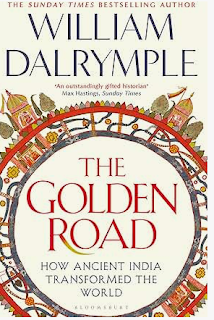
The Five Recommended Books of 2024

  Here are my Top Five Books of 2024 - a  must-read!   1.         The Golden Road by William Dalrymple 2.         Th...