December 27, 2024

The Five Recommended Books of 2024


Here are my Top Five Books of 2024 - a  must-read!


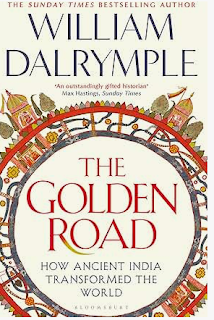
1.        The Golden Road by William Dalrymple

2.        The Seven Deadly Sins: The Biology of Being Human by Guy Leschziner

3.        The Health and Wealth Paradox: How to Use First Principles Thinking to Achieve Both by Ankush Datar and Mihir Patki

4.        The Stoic’s Guide to Life by Rasha Barrage

5.        Money, GPT, AI and the Threat to the Global Economy by James Rickards.


About each Book in brief


1.        The Golden Road by William Dalrymple


After facing previously backlash for over-emphasizing on the Silk Road which may have emboldened China to launch the Belt and Road Initiative in 2013, William Dalrymple comes back to India to weave a fascinating narrative about how India was once the center of the world and traded more with Rome as well as with so many other parts of the globe that in today’s parlance would amount to spectacular multilateralism – and in ways that made “Indosphere” the most influential sphere of World Economy. Whether or not you are an Indophile, this book gives you epic proof of what was once, along with China, the center of the world trade. Sure to become an instant classic.


2.        The Seven Deadly Sins by Guy Leschziner


It takes a professor of neurology and sleep medicine to have a deep look at the seven deadly sins that create certain medical disorders which are posing a challenge to the medical world. With cutting-edge science and examples from real patients, Leschziner’s book takes us on a fascinating journey of how our bodies and brains are wired and how the seven sins not only represent our moral failings but also simply human functions that aid us in life or by hardwiring prevent some functions in humans. In no particular order, you can read about these seven deadly sins, viz., Greed, Sloth, Gluttony, Pride, Envy, Lust and Anger. A 373 page-turner.


3.        The Health And Wealth Paradox: How to Use First Principles Thinking to Achieve Both by Ankush Datar and Mihir Patki


Two Twitter/X market watchers meet serendipitously and collaborate on what is the most improbable topic that’s a heady combination of Health and Wealth. Most books on these topics do not meet at the intersection of health and wealth but the book above talks about a unique set of first principles deeply embedded in health and wealth which can be applied to both. What is the connection between Ketogenic diet and Value Investing? Or, looking at FSSAI labels on food products and trading on the Derivatives market? How can you apply the power of compounding in equities principle to your fitness journey? With extensive research and latest findings, these two authors condense with fascinating detail and simplicity on the first principles that make up your health and wealth with humbling anecdotes from their personal lives. Twelve chapters and many principles highlighted in each chapter with neat summaries at the end. One of the surprisingly delightful reads of 2024 released in the last quarter.


4.        The Stoic’s Guide to Life by Rasha Barrage


Stoicism has been populating bookshelves over the last decade as the essential philosophy of life and living ever since authors like Robert Greene, Ryan Holiday and Darius Foroux have been exploring the many facets of Stoic philosophy and the timeless wisdom on the art of living. Most Stoic books have become voluminous and more condescending than a web series on Netflix with daily reminders, introductions and diarized jottings on everything from fatherhood to war and wealth. This book is the shortest introduction you will ever get on the topic to get started off on this philosophy of 2,300 years. It starts with an introduction on the philosophy from the men who shaped and improvised on stoicism from Zeno to Seneca to Epictetus to Marcus Aurelius. It takes you off on the virtues propitiated with each father-figure into concise chapters on wisdom, courage, temperance and justice and concludes how to blend all of them in our lives. As a philosophy that’s now spreading faster than crypto craze, this book released in 2024 is one of the shortest and inspirational tome that fits in your pocket.


5.        Money, GPT, AI and The Threat to The Global Economy by James Rickards


James Rickards is the author who always comes with prescient observations on aspects of world economy which create tectonic shifts and disrupt the status-quo. Most of his previous books like Currency Wars, The Aftermath and The Road to Ruin covered areas whose repercussion are still being felt by forces that shape our markets and economies – they could be trade wars, currency manipulations, or reckless central banking policies. He has earlier touched upon the crypto currencies in The Death of Money. In the above book, he follows up on the most important force that is disrupting our work lives and our world as we know. Taking an example of how a popular magazine “Foreign Policy” published two essays on a geopolitical theme earlier, one by AI and another by a reputed professor, the author builds a good premise of how AI is not fool proof, not a maven, and no motives and therefore builds a case of how excessive reliance on ChatGPT or its many Avatars should not fool us in trivializing the human ingenuity or capabilities. Like Henry Kissinger’s “Genesis” released posthumously this year, James Rickards’ new book is a readable treatise on the pitfalls one should stay clear in the AI overload. He later concludes that traditional asset classes like gold and silver ought to weigh a third of the portfolio representing tangible nondigital assets. With extensive bibliography, this book takes the cake in being the last word on the phenomena of the last few years – ChatGPT, AI and Money in that order!


August 29, 2023

"Jailor" (Telugu/Tamil) Movie Review: Electrifying!


"Jailer" is an electrifying entertainer in commercial format by Nelson who always builds a complex web of crime and police with stylish elements. It is not easy for an aging Superstar like Rajni to ace movies with a familiar template (of a heroic veteran looking like on some gardening leave but having massive latticework of connections in the backstory). Rajni acts like a smiling assassin with dignity and grace aided by a whole infrastructure of talent to resurrect his box-office fortunes after three back-to-back duds. The pace of the narrative never lags and whenever it seems to laze into indulgent comedy or silly scenes, the BGM of Anirudh accelerates the cinematic track back into energy or the gang of villains regroup into their next up move against the “Jailor”.

The story: Varman (played by Vinayakan) is the villain of the film who is on a fancy mission to steal statues of ancient temples. Two people stand in the way. One is a jailor (Rajni) and the other is a cop (Jailer’s son played by Vasanth Ravi) who demands a share. He cleverly seems to have bumped off the son (Has he? Find out) but the jailor is a man who outwits him at every turn. The contest between the Jailor and Varman is the most engaging part of the movie. The best histrionics of the film are by Vinayakan (Varman) who got the most improbable break to act opposite Rajnikanth. Any other film industry wouldn’t have given such a generous role to an actor like Vinayakan with his uncharacteristic looks and personality. But for a villain, what matters is the persona and the punchlines - and in both Vinayakan pulls off an incredible feat that surely must not go unnoticed in future. Yes, Rajni has given a free hand to the director in populating the film with the most explicit and graphical dosages of violence not seen in any of his earlier films. To make up for comedy and glamour, Nelson keeps a tightened grip on drawing a compass around the film with mostly the characters in the plot - most notably, Redin Kingsley for comedy. Sunil, the mass Bollywood comedian recruited for a hard purpose miserably fails to deliver and Tamannah, as his incredulous ladylove also flounders.

Overall, the movie rarely seems to plod on despite 165 minutes, except for the raunchy filmy masala scenes involving Sunil and Tamannah. For Rajni, the comeback is strong aided by a lot of his brethren from the South like Mohanlal and Shiva Rajkumar whose limited footage is cleverly used twice in the film for heightened effects.  The Rajni formula is intact - and neatly entertains. What’s missing is a romantic track with his wife or lover - but the intensity of the plot doesn’t give you options to look outside of the conflict between the Jailer and Varman. The best part of this violent film with a surprise ending that leaves you niggled with a mixed after-taste is that the hero knows his physical limitations and enlists an impregnable pack of sniper commandos who always give him good cover. This is the hard truth of our lives - which many of today’s younger and other aging mass heroes do not realize - and you can see how Rajni’s heroism and stardom do not shrink one inch on screen despite the sniper props Nelson strategically places at various pivotal points in the film. “Jailor” is watchable but if you don’t stomach graphic violence, stay at home. 


My Rating: 3.25/5

December 24, 2022

A Colossus in Acting (Navarasa Natana Saarva Bhowma) departs – Long Live Kaikala Satyanarayana


Kaikala Satyanarayana is one of the original greats who rose from abject wilderness into a lifespan of limelight that never dimmed until his last breath. There are very few actors in world cinema who can be compared with his range of acting, his repertoire of characters and his filmography from the B&W era to the color era. Not a joke to act in 777 films and have his own inimitable stamp of assertive body language, a timber and tone that is longer than what you hear when a Texas woodsman saws a 350-year-old tree with his lumberjack, and it creates a long noise that’s heard for a long time. Satyanarayana’s laughter is equally intense and that has been the most imitated sound by mimicry artistes. That they could replicate the tintinnabulate sound is a tribute to KS but how he reproduced that sound in between lengthy dialogues are proof of his verbal capacity. At the age that he passed today, eighty-eight, he has outlasted almost all the Tollywood greats who travelled with him and departed before him from SVR to NTR to ANR to Savitri to Gummadi to the trinity stars of Shoban Babu, Krishna and Krishnamraju. His weight in the film’s success was always under-appreciated but nobody could gainsay the intrinsic weight he carried on his own shoulders. That’s why for most of the films where the titles rolled, if Kaikala Satyanarayana acted in the film, his name with all the sobriquets adorning it was usually mentioned at the end (Like “…And Pran”) or in later years, right at the beginning out of veneration to his body of work. It shows Satyanarayana’s stamp of authority on Telugu Cinema that whoever was there in the frame, he cannot be ignored; he was indispensable, and roles appeared custom-built for his versatile range of acting replete with all the nine emotions as they say.


Much has been said in the TV Channels and across the web about Satyanarayana’s astonishing film career. But some points must be noted in his honor for the record of his class and sustained success over sixty years of the Film Industry.


1.          Kaikala Satyanarayana transitioned from a dupe to a character actor to an anti-hero and later as a mighty mythological character or as a full-length comic character. Occasionally, he starred as a hero on request from well-wishers and willing producers, but he never let that go to his head. He realized that amidst stalwarts like SVR, Nagoya, Gummedi, Nagabhushanam and Rajababu, he needed to constantly learn and unlearn and improvise and bag roles that defied any classification or typecasting. For example, after “Taata Manavudu” (where he plays the hero along with Rajababu) he could have settled as a hero also with his tall and handsome looks but he chose to remain menacing and evil-minded on the screen because of the huge opportunity for such characters in the 60s and 70s. Somewhere in the late 70s and early 80s, Satyanarayana starred in another film as a hero called “Moratodu Naa Mogudu” (Heroine: Jayasudha) which became a blockbuster hit. Yet, he was grounded and never insisted on hero roles.


2.          KS straddled the world of commercial films as well as roles that made him an icon and a role-model hard to match. Whatever be the camera angle, or the storyline or the director’s cut - Satyanarayana always delivered be it as a rapist, sadist, eve-teaser, drunkard, silly son, wise father, father-in-law, irresponsible son, guardian angel, doting uncle, or a father-figure. The success he achieved in any role speaks volumes about his dedication to the acting craft, his theatrical strengths, his baritone voice, and his attention to detail.


3.          Very few actors in Indian Cinema looked the part as much as KS and lot of credit must go to his fussiness over makeup. Perhaps taking a cue from SVR and later, his screen buddy NTR, Satyanarayana had the best of makeup support team to distinguish himself on screen and make him a treat to watch whether he is playing Yama, Ghatotkacha, Sher Khan, Mentor (in “Simhasanam”), Duryodhana, Deceiver (“Brindavanam”), or as a charlatan in “Vetagadu”. His looks and his presentation were always a standout and a draw for the film though he never bothered to check how the credit to a film’s success got apportioned to him.


4.          During the tricky years of rivalry between NTR and Krishna when they were making films on the same theme such as Mahabharata, KS has the distinction of being the only actor who starred in both “Kurukshetram” (as Duryodhana) and “Dana Veera Soora Karna” (as Brim). Reports say he was as neutral and professional during this phase keeping confidentiality about the projects racing against time, finally released on the same day. In that sense, KS maintained the same stature and earned respect of every generation of heroes and eagerly welcomed them or encouraged them when they appeared on the screen. From NTR to Chiranjeevi to Mahesh Babu (in “Maharshi his last film), KS kept his tryst with every generation of actors. He never needed to lift his little finger to come out trumps against any actor because of his innate abilities in acting but he will leave you with moments and images of his persona in ways that will haunt your imagination while still appearing as non-threatening to co-actors.


5.          Subhash Ghai had cast Kaikala Satyanarayana in one of his films. Perhaps “Karma” where KS plays as a bad man opposite Dilip Kumar. Something that shows his stature and his “star value” in non-Telugu films. In K. Viswanath’s films also, KS was one of the regulars and one can take a masterclass in acting from all the roles he played in K Viswanath’s films from “Jeevan Jyothi” to “Shubhalekha” to “Shrutilayalu” to “Janani Janma Bhoomishcha” to “Sutradharulu” and “Apathbandhavudu”, he will be seen in new light - sans swagger and extra-meanness and surrendering himself to the master director. Ditto in films with Bapu (“Sita Kalyanam”, “Sampoorna Ramayanam”, and “Rambantu”), Dasari Narayana Rao (“Thoorpu Padamara”) or K Balachander (“Rudra Veena”) or SV Krishna Reddy (“Ghatotkachudu” and “Yamaleela”). Very rare for an actor to get picked up by so many wonderful directors.


6.          KS got the Raghupati Venkayya award for his contribution to Telugu Cinema as an actor and as a producer (making films like “Kodama Simham”). Again, not many character actors received such an honor. Gummed and Allu Ramalingayya were the only other character actors who received this prestigious award. As the standards for the award became tougher, Satyanarayana earned it rightfully in 2011.


7.          It takes talent, discipline, and exceptional time-management to wrap up shooting roles in so many films - how Satyanarayana managed ought to be a case study in film studies. In the history of Telugu Cinema, Satyanarayana may have got over-shadowed in popularity by occasional spurt of villains who invent new idioms and idiosyncrasies in voice modulation like Rao Gopal Rao (modulation), or Prakash Raj (intonation) or Kota Sreenivas Rao (accent). But the reasons for eclipsing him are not because he vacated the space of villainy for new entrants. It can be interpreted that he never wanted to be the sole and permanent villain in the Film Industry; he wanted to experiment many roles, get imprinted in public consciousness by playing mythological characters (which requires special talent and demeanor). To that extent, because KS co-acted with NTR in over 100 films and with legends like SVR in over 20 films, he must have studied the art of mastering multifaceted roles from social to folklore to mythology to historical to devotional to comic capers.


8.          Tonight, many Indian actors and those who think they are urban legends will regret that they couldn’t act with this phenomenal actor called Kaikala Satyanarayana. For all those who cherished acting or collaborating with this handyman of Indian Cinema, it gives rich memories of a stellar filmography of close to 780 films. For the audiences who grew up watching him on screen and getting petrified or violated or moved or intimidated or scarred or motivated or regaled or deeply impacted by his characterizations, the fact that KS is no more is a big void that can never be filled. If Telugu Cinema is today hailed as the only film industry in the country that gives a sumptuous meal like a Thali meal, then KS has always been that one item or ingredient in the Thali who pulled punches and gave you money’s worth.


9.          KS proved that being a part of a film is more important than playing a meaty or a lengthy role. In “Kodama Simham” he can be hardly seen though he produced the film. In “Arundhati” you cannot ignore him as a Patriarch who is both afraid and respectful of Anushka. In countless films, K Satyanarayana entertained us with thrilling combinations - with hero, co-artistes, co-comedians, etc. Another great lesson for those who want to run everlasting marathons in silver screens.


It took 88 years for a man who played the God of Death to reach the afterworld of death. Peace to his well-lived life. Om Shanti.


January 21, 2022

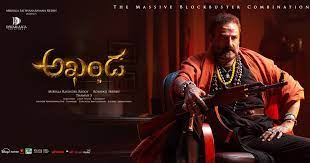
"Akhanda" (Telugu Film Review)


“Akhanda” (streaming on Hotstar) is worth the wait for Balayya fans who didn’t dare go near the theaters. A perfect Boyapeeti Seenu mark movie with all the right notes about woman power, climate control and those incredulous, blood-curdling, surreal stunts in slow-motion. Balakrishna shows restraint and composure in both the characters elevating the two roles of a farmer and an Aghori. Screenplay is concise and taut, and dialogues hit the bull’s eye for Balayya fans besides making a point about Hindu culture’s new-age recalcitrance. Music by Thaman is the soul of the film; take it away, and most of the Akhanda’s phenomenal screen-presence would have fallen flat. What can subtract the film is the over-dose of physical violence- when in fact, a brilliant opportunity was lost to showcase the spiritual and the subtle powers of Aghori played by “Akhanda”. 
 
Overall, performances by Poorna, Srikant, Pragnya, Jagapathi Babu give good support to another powerful performance by Balayya. If only some of the stunts got subtler or even cut out at the editing table, the second half would have been more engaging in this 167 minute extravaganza. Still, "Akhanda" lapped up more adulation in Telugu states than "Pushpa" in the way it showed larger-than-life effects without lowering the dignity of women. 

 
A few years from now on, "Akhanda" will be remembered for the taut screenplay and straighter narration sans humour, of telling an improbable story of an Aghori inserted in the most unthinkable way as a twin. Music by SS Thaman will be remembered for the burdens of interpreting the world of mendicants meditating upside down in his own fusion style music which has layers of mantras, strings, and techno plug-ins blended into one long spell of Buddha-bar-resembling sound tracks. It lacks the simplicity we saw of Thaman in the whole of 2020 and most of 2021 but what can he do if the idiom demanded it?
 
My rating: 3.25/5

April 30, 2021

"Vakeel Saab" (Telugu)


Worth the wait and an engaging comeback film for Pawan Kalyan. Not in the same intense class as the original “Pink” which was shorter by 25 mins, but well-adapted to suit the larger-than-life sensibilities of PK fans and his current political career’s work-in-progress. Director Sriram Venu drives the film in graded gears - establishing the plot of how working women land in distress and get out of it with belated but avuncular steering by Vakeel Saab Satyadev (PK), once he steps in rustic contrast, pitted against a sophisticated lawyer Nandagopal played by the mercurial Prakash Raj. Their rivalry, energy and sparring in the court, makes it the most riveting part of the film despite the strange goof-ups in cross-examination. Thaman’s melodious songs and his sonorous BGM score makes the narrative well-nuanced and memorable at times. Pawan Kalyan, undoubtedly, steals the show in the climax, aided by another famous performance by Prakash Raj, Anjali, Nivetha and a surprise cameo by Sharath Babu. Dialogues are sharp and contextually concise within the perimeter of the script. Proud memento film for producer Dil Raju to bring one of India’s most intense and meaningful film to the Telugu audiences, in reasonably entertaining and dumbed-down format about a film that redefined this generation how Indian society paints stereotypes of girls as “Pink” and boys as “Blue”. Watchable, though not with the toddlers - both for the theme and the expletives.

Rating: 3.5/5

#VakeelSaab #PawanKalyan #PinkRemake #PrakashRaj #SriramVenu #DilRaju #amazonprime #ThamanS

March 29, 2021

The Suez Canal Syndrome: A repeat of "Who Moved My Cheese?"


I have a different view of The Suez Canal ship incident. I am appalled at the indifference of the Egypt Govt. It again reflects the shoddy way in which a Canal which was the pride of British, an engineering marvel now faces lack of modernisation and efficiency. The Suez Canal became a reality with the efforts of Ferdinand de Lesseps. It became a symbol of the British Empire, it's opening - one of the 20th Century's biggest events. Then, the Suez blockage of 1969 - became a subject of the pride of British Empire. Eventually, the crisis got resolved by making Egypt the new national owner through The Suez Canal Company - through which 90% of the world's ships pass. 

But Egypt has done nothing to develop the Canal since which became one of its biggest revenue sources, fraught anyways with desert lands on one side and Pyramid tourism on the other hand. It is owned by Egypt - The Suel Canal Company with few other external shareholders representing British, French and German interests. The company collects around $150,000 per ship every day. So an average of 50 ships pass through the Canal every day. That means around $7.5 million per day. Works out to $2.7 billion per annum. With that kind of easy money just for collecting toll, Egypt could have done so much better in improving the dredging and automating the offloading practices at the Isthmus but no, the government didn't do much to improve upon their practices, still manual and ancient. The Evergreen type of incident will keep repeating unless the world finds other avenues of diverting traffic, or demands more accountability from Egypt. I call it the Suez Canal syndrome - it happens when you get lot of annuity revenue for doing nothing much new. It can happen to anybody and any entity - who cannot innovate and manure their portfolio of cash flows coming in for a good reason now, but do not know how long the good times last. Suez Canal Syndrome, I would call is that syndrome where you take your cashflows for granted without manuring the ground for earning cash flows enough. It can be Egypt today, or Saudi Arabia after 15 years etc. Reminds me of "Who moved my Cheese?" story. 

Moral of the Story: Never take your cash-flows for granted.


#SuezCanal #SuezCanalSyndrome

October 13, 2020

Scam 1992 - The Harshad Mehta Story Web Series Review


If you want to have a recap of all that happened during the unravelling of India's Greatest Financial Scam and re-live the 80s and 90s evolutionary phase of the Stock Market before it reached the heights of the Y2K boom, please watch "Scam 1992 -The Harshad Mehta Scam" on Sony Liv OTT. Ten hours of unalloyed, gripping story-telling, sincerely drawn and adapted from Sucheta Dalal and Debasis Basu's seminal book "The Scam". We cannot imagine the ease with which we trade in shares and government securities today if we watch that era when we had to endure transfer deeds and outcry times. When the Sensex base was so low that people panicked due to fall in number of points to what we now experience when we measure in percentage falls, its a long way we have come. 
 
Hansal Mehta has captured the essence of the scam in a riveting narrative that will not quench your thirst until you finish all the ten episodes streaming live. Handled with lot of objectivity and commentary underpinned to current happenings - it connects the transitory phase with deftness and maturity - that a three-hour Bollywood movie cannot capture. It is the best OTT output of 2020 and something that is worth all of your ten hours of time - whether you want to re-explain it to your non-savvy mother or driver, or to the Robinhood Investors who haven't yet experienced the kind of "animal spirits", hubris and nemesis that Harshad Mehta once made us experience - when there was no whatsapp and online trading and mutual funds meant only US 64 and PMS. Anshal Thakkar's piercing BGM score only enhances the seriousness of this magnificent film that will soon become a DVD classic. Pratheek Gandhi as Harshad Mehta and Shreya Dhanwantaray as Sucheta Dalal give the performance of their lives. Because it is a retelling that shook the faith in India's nascent capital markets - it deserves wide viewing and patronage - because history keeps rhyming again and again. 
 

May 1, 2020

Covid Lessons From "Sankarabharanam" Movie

 
Just watched "Sankarabharanam" for the umpteenth time on Gemini TV (A week's fest of K Viswanath's films starts today every day). An eternal classic, the film always gives you a message for every season. This time, as my parents, my wife and I were in a trance watching each scene with rapt attention, I noticed a message for the Covid times in "Sankarabharanam". In the pre-climax, as an impoverished Sankara Sastry (JV Somayajulu) walks past the house of his once-upon-a-time percussionist Gopalam (Sakshi Ranga Rao), the former notices the latter trying to tune his Mridangam. Sankara Sastry mildly remarks to Gopalam that his Mridangam is missing a beat. Gopalam then bares out his heart that he has long missed the beat when he deserted the Great Sankara Sastry when he walked out of his "kacheri" in a hasty move - only to regret for the last 12 years. Sastry then consoles Gopalam that it is not Gopalam's fault nor his flaw but the times are such that the crowds can't hear great Indian Classical music. But times won't be so desolate for long, and very soon, good times will roll on and the public will usher in a golden era of good melodious music. Sastry had undying optimism more than the despondent Gopalam about the bad times that will soon be enveloped by sunshine days. And he also gives part of his borrowed surplus to Gopalam to tide over the tough times, even if he himself is struggling to have two square meals a day. Thats the spirit of Optimism and large-heartedness which is needed for Covid times. Be generous in giving to those who are less fortunate than you and never doubt whether good times will come back. 
 
And in the climax, Madhava Rao (Allu Ramalingayya) re-introduces to the audience who have come to hear Sankara Sastry's public recital for the first time in 12 years (which ironically turns out to be his last hurrah). And he says, even in stark poverty and darkest times, Sastry continued to practice his classical music as a maestro will and didn't mind the absence of audience. Instead, Madhava Rao adds, Sastry actually confined himself to the four walls of his house and made all the unseen parasites and viruses and invisible insects and pests his target audience for rehearsing and practicing his performance. Well, that's how Maestros and professionals adapt to tough times. Like the four seasons, the Covid times will be gone before you realize but we must do what we are good at, and take the tidal wave of Covid Scarcity and negativity with a pinch of salt and overcome with optimism. It will then arm us for a better tomorrow - which is just round the corner. Even after forty years, "Sankarabharanam" has a message to be hopeful, optimistic about the future and never waste a good crisis brooding with inaction. Make it count - in ways you become stronger, better and brighter.
 

A Lucky Star without Tantrums - Rishi Kapoor


Rishi Kapoor. One of the most happy-go-lucky actorss in Bollywood. Always cherubic and bubbly. A lucky mascot. For everyone who worked with him. For his father who was reeling under huge losses from "Mere Naam Joker", he became a money-spinning "Bobby". For heroines who got launched with him like Padmini Kolhapuri and Dimple. For co-stars and superstars. And for many producers and directors who found in him the mettle to rub shoulders with multi-starrer giants. He became the proverbial David who charmed many Goliath-like giants with his non-threatening effervescence and ego-less pranks. Most of the films starring Rishi Kapoor became box-office bonanzas for producers though he never got full or deserving credit for his performances that pulled in the crowds.
The only girl he ever got linked with early in career was Dimple who eloped with Rajesh Khanna, even after wearing a ring given by Rishi when they were dating during "Bobby". Of course, he married Neetu Singh finally - and thats one heck of a love-story for a free-wheeling 80s couple who did 13 films together with dazzling chemistry.
 
Raj Kapoor always thought Rishi would make the most successful director (he did direct "Aa Ab Last Chale" which didn't click). But he became the most successful lover in the history of Bollywood: always walks away with the girl, whoever else in the triangle may be - Vinod Chopra, Kamal Hasan or Vinod Mehra. He became Amitabh Bachchan's most famous Tillu Bhai in many memorable hits of the 80s and happy to play second fiddle to the reigning Superstar. As a nice guy, he has so far given the best shot amongst the Raj Kapoor's sons sustaining himself in a career spanning four decades since he first appeared. Before he came in as "Bobby", Bollywood films used to be all about men and women, as a critic remarked. After "Bobby", it was about boys and girls.
 
Rishi Kapoor went on to belt out the most iconic dancing hits and Qawali numbers of an entire generation many of which became titles of blockbusters in 2000s. Before the likes of Govind and Mithun, it was always Rishi who was rated the best dancer for a long time. It was quite an achievement for Rishi- to serenade a heroine, and synchronize dancing steps with her without an effort. The disco lights, the revolving dance floors and the psychedelic lighting bulbs of the 80s would have all looked out of place were it not for the elegance of Rishi Kapoor's cadence and ease. He would break into a song and dance and everybody out there would fall in sync - swirling and crooning without an apology.
 
There are actors down South who followed the same model of Rishi Kapoor in experimenting with new heroines and playing second fiddle in multi-starters as long as they could hold your own - Chandra Mohan in Tollywood and Siva Kumar in Kollywood, they became known as the Rishi Kapoors of their respective Film Industries. Of course, it could be argued the other way too - why not Rishi Kapoor be called the Chandra Mohan of Bollywood? But that's a different topic!
Rishi Kapoor, later transformed into playing played mature characters after his gait and genetic code no longer made him look younger because of the famous Dal Makhni Kapoor staple diet. In the last decade, he became Bollywood's severest conscience keeper raising holy hell every time the Industry stalwarts floundered in responding to the 'crying need of the hour' be it #Metoo or a war-like situation. He also brook no nonsense with his recently released autobiography "Khullam Khulla" (in which he nailed stars like Rajesh Khanna or Amitabh Bachchan with no-holds barred revelations).
 
Of course, his fine acting continued with the likes of Irrfan Khan and Amitabh Bachchan ("102 not out") and he would have easily given another shot at third innings at a time when his son Ranbir Kapoor is earning solid spurs as the next Superstar of Bollywood. That speaks a lot of about the original first family of Bollywood - the Kapoor Clan whose gene pool keeps gifting Superstars and Divas who became endearing icons of Indian Cinema. Rishi has travelled as far, if not farther than all his great uncles but perhaps will have the last laugh once his son conquers Bollywood one day, if not already. It is quite ironic that the Star who gave India's first song on self-quarantining ("Hum Tum Ek Kamre Me Bandh Ho...") should pass out during India's self-quarantine period. And in his passing, the whole nation says "Om Shanti Om" to the man who sang the most famous anthem of the 80s with the same words. Truly, Rishida will be missed by the 80s generation and one hopes that his legacy will be carried on by son Ranbir Kapoor to the next level. 
 
My favorite films of Rishi Kapoor:
1. Karz
2. Amar Akbar Anthony
3. Chandini
4. Zamaane Ko Dikhana Hai
5. Sagar
 

April 29, 2020

Life of an Infinite Actor - Irrfan Khan


Irrfan Khan. Undoubtedly, the best actor of this generation who gave a stunning range of films that will keep resonating as long as we go. Whether it's a blink-and-a-miss role in "Spiderman" or a brief role in "Slumdog Millionaire" or any of the stylish performances in "Piku", "Talwar", "Pan Singh Tomar", "Life of Pi", "Maqbool", you cannot take your eyes off screen when Irrfan Khan is emoting. It doesn't matter what he is wearing or how he's shaved for the film, you have to be at your best hearing sense to grasp all the text and subtext in his acting with his murmuring accent and a swagger that doesn't look seem like a swagger.

In "Piku" you can see the sweat and blood of Deepika Padukone and a herculean effort by Amitabh Bachchan to compete for the attention of the audience whereas Irrfan Khan made it look so effortless on screen. Likewise whether he is explaining a Siska bulb benefits or a Vodafone recharge ad or doing a jig with Shah Rukh Khan at a film festival whether art films are as good as mainstream films. In spite of the irony of the 2000s where a lead actor's remuneration become as big an overhead as a budget of a film, Khan's swashbuckle and finesse in acting became a toast of every film he got associated with. Hollywood also cast him in many films but when it comes to Irrfan's lines, there was something always ethereal, magical and evocative than the other actor's lines. Yes, and the subtlety he brought to screen didn't threaten the other actors sharing space with him unlike say, a Shatrughan Sinha but enhanced the "repeat watchability quotient" of the film without an elaborate overlay or an over-assertive baritone like that of Nana Patekar.

While we never noticed who really took the baton from the arty films caravan of actors like Naseruddin Shah, Irrfan Khan created his own inimitable and enduring shelf-space in a world dominated by the three Khans until a few years ago. And unlike Naseruddin Shah, Irrfan took the torch of towering performance from film after film and passed the baton to actors like Nawazuddin Siddiqui and many other stage actors and superstars in mainstream plots and commercial films. Thank God, Tollywood also cast him in a forgettable role as a comic villain in "Sainikudu" with Mahesh Babu and Trisha. But Thank God, Tollywood didn't checkmate his fledgling career with fat cheques that would have merely created another Prakash Raj or Shaji Shinde in South Cinema.

In the finite gallery of films that Irrfan Khan got associated with including the many international collaborations that put him limelight as a draw for Asian audiences, it will remain a nonpareil feat for any other actor to beat in this generation. Most actors of his calibre would have wasted their raw talent with more commercial themes or silly gaffes or sundry makeups of a granny or a transgender or a bandit and so on. Not so in the books of Mr Khan. When he dons a role, the role becomes a reprise in the interpretation of the irrepressible Khan himself - no need for any bells and whistles of the character or any set property. It therefore becomes important that the legacy of Irrfan Khan is a fascinating history of how a late-bloomer annexed chartered and uncharted territories across the globe and built a space that even time cannot erase forever. There will be many more odes to Khan as the world wakes up to cold fact that he is no more. One of them will be how Irrfan Khan's latest film "Angrezi Medium" got released on the OTT platform amidst the Covid blackout of theaters world over. This may well be the future of all small and medium budget films and to get associated with the debut on an OTT platform also goes to the credit of Irrfan Khan. As he passes out in the holy month of Ramzan, I pray that Irrfan Khan finds peace wherever he goes next and strength to his young family who survives him. You were quite a draw, Irrfan whether we saw you first on TV, Silver screen or OTT.

Here are my top picks of Irrfan Khan's filmology:

1. LunchBox
2. Talwar
3. Piku
4. The Namesake
4. Maqbool
5. Life of Pi
6. Life in a Metro
7. Pan Singh Tomar
8. Hindi Medium
9. Qarib Qarib Single
10. Carvan


#IrrfanKhan #IrrfanKhanFilms #LegendsOfIndianCinema #WorldCinemaLegends #Bollywood

January 16, 2020

Sankranti Movie Ratings (Telugu) "Darbar"/ "Sari Leru Neekevvaru"/ "Ala Vaikuntapuram lo"/ "Entha Manchi Vaadavura"

Sankranti films are always special. And I have seldom missed in the last twenty years. Didn't have the time to review in detail, though because reviews hardly matter for Sankranti releases. You will somehow watch with your gang of birds flocked together in urban or rustic settings. But I will give my strong opinions (as strong as ever) if it still counts:

1. "Darbar" (starring Thalaivaa Rajnikanth)...Telugu

Average film with below-par story and straight narration by AR Murgadoss. We expect nothing but mediocrity from Rajni and yet fall for his swagger and mechanical drills but are more harsh in our expectations when it comes to other Tamil Superstars like Kamal Hassan, Suriyaa or Vikram. It seems to get incurable and hopeless with each passing year for Rajni except last year when "Betta" had electrifying Rajni effects.

Rating: 2.5/5

2. "Sarileru Neekevvaru" (starring Superstar Mahesh Babu)...Telugu

A routine story with high dose of entertainment and commensurate performances by actors alongside Superstar. Notable are Prakash Raj, Rajendra Prasad, Rao Ramesh and Vijay Shanti. Rashmika is cute but over-the-top in the movie with her ibby-jibbies. Highlight of the film is Mahesh Babu's out-of-comfort-zone acting and body language that reminds you of films like "Khaleja" and "Dookudu". His characterization is also refreshing as to how a soldier would mend civilians losing their civic sense and sense of civilization. If only he allowed more space for etching out Vijay Shanti's character, the film would have gone to another level. But the soldier's take on society is both pleasant and rapturous thanks to Anil Ravipudi's directing. Despite the film moving on predictable lines post-interval, his clarity and grip on what he wants the audience to take away from the film is complete. Tamannah Bhatia gets the most flattering item song for any item girl in the industry so far. Length could have been shorter by 25 minutes. If there is anything for Mahesh Babu to consolidate his position, he should reduce focus on his good looks and screen time and invest in better and more interesting stories. Yet, 169 minutes is mostly watchable once.

Rating: 3/5

3. "Ala Vaikuntapuramlo" (starring Stylish Star Allu Arjun)...Telugu

Trivikram created an entertaining narrative of 165 minutes about a theme stealth-borrowed from an old Telugu film classic starring NTR and R Nageshwar Rao "Inti Guttu". He re-interpreted the film for the new-age audience well but there are fatal flaws in the film which are not discernible to the audience. Yes, you can ignore baby-swapping as a doable crime 20 years back. But Trivikram who defends middle-class moralities and lectures on their upkeep has created a story which has faultiness on middle-class morality. Firstly, no middle-class father foregoes his baby boy to enter a billionaire family so he may get ahead in life and riches. Secondly, no adopted son disowns his past upbringing to crave for a billionaire's mansion at the very moment the secret unfolds. Thirdly, it is irresponsible on Trivikram's part to paint the picture as rosy as a "Lion King" destiny in picturing Allu Arjun's moment of destiny just like in Walt Disney tale where a baby Simbha learns that his blood is leonine and hence cut out for bigger things like ruling the kingdom. Yes, blood is thicker than water but in reality your upbringing and environment makes all the difference in how you shape your daily moments and destiny. In characterizing the contrasting roles played by Sushant and Allu Arjun, director shows as if none of the inputs or parental guidance provided by either set of parents has any bearing on the way their personalities are shaped. This is ridiculous and self-perpetuating myth which only leads to inequalities in society. The most famous case is the "Nobel Prize Winner Sperm Bank Experiment" where someone thought it is best to impregnate as many women with the sperm bank of Nobel Prize winners so that mankind will get more geniuses like Nobel winners. Trivikram's thesis in the movie is that outrageous and preposterous. I am appalled that along with many other flaws as pointed earlier, it is middle class audiences who are raving about the film as a cult classic. Nonsense. Despite that, the film is carried entirely by Allu Arjun with a never-before performance that stands out in all departments. Thaman's BGM and musical score are also a stand-out; his transformation from copying fast-track western albums to creating new sounds with refreshing mix of traditional and western instrumentation is the story of the last three years as to who is ruling the sound waves in TFI. Stunts are always creative in Trivikram's films but when you are surrounded by so many bashers, how does anybody get so creative to wield a woman's dupatta or a car windshield to polish off the villains beats me! Entertainment quotient is high though comedy content is low. What disappointed me is lack of clarity in Trivikram's taking in the film right from points mentioned above to Murali Sharma's unrepentant characterization. At least a minute out of the 165 minutes could have been taken to round off Murali Sharma's litany of crimes. Watchable once.

Rating: 3/5

4. "Entha Manchi Vaadavuraa" (Starring Kalyan Ram)...Telugu

Vegesna Satish comes with interesting concepts that hold some message for the new generation drifting apart from the world we grew up in the 60s and 70s. This time he comes with a theme of filling the void left by growing generation gap in our society. Like buying bottled water and twiggy-ordered food, he builds a beautiful plot around hero Kalyan Ram and his fiancé Mehreen. Kalyan sees every family has an emotional bond missing with the loss of a dear one be it a grand-father, son, sister, daughter or an aunt and so he sets up a company which "leases" the missing kin until the emotional needs are fulfilled. It is a slow narrative of 144 minutes with only three songs but content is unique and layered with good performances by hero and heroine besides a galaxy of vintage actors like Annapurna, Suhasini, Sarath Babu and Giri Babu. Like "Shatamaanam Bhavati", Satish has a knack of presenting relevant messages to keep our social structure intact in the wake of increasing nuclearisation of families and isolation of the elderly generation with the dawn of new technologies and general apathies. It is tough to expect jazzed up entertainment in this kind of narrative but if you are patient for the first thirty minutes, you will get some moments of epiphany in the film. Music by Gopi Sundar is outstanding. Watchable once with the elders.

Rating: 2.75/5

#Darbar #SarileruNeekevvaru #AlaVaikuntapuramlo #EnthaManchiVaadavuRaa" #SankrantiReleases #SankrantiMovies

The Five Recommended Books of 2024

  Here are my Top Five Books of 2024 - a  must-read!   1.         The Golden Road by William Dalrymple 2.         Th...